 Image 1 of 1
Artificial intelligence is beginning to move beyond data centers and software applications into machines that perceive, reason, and act in the physical world.
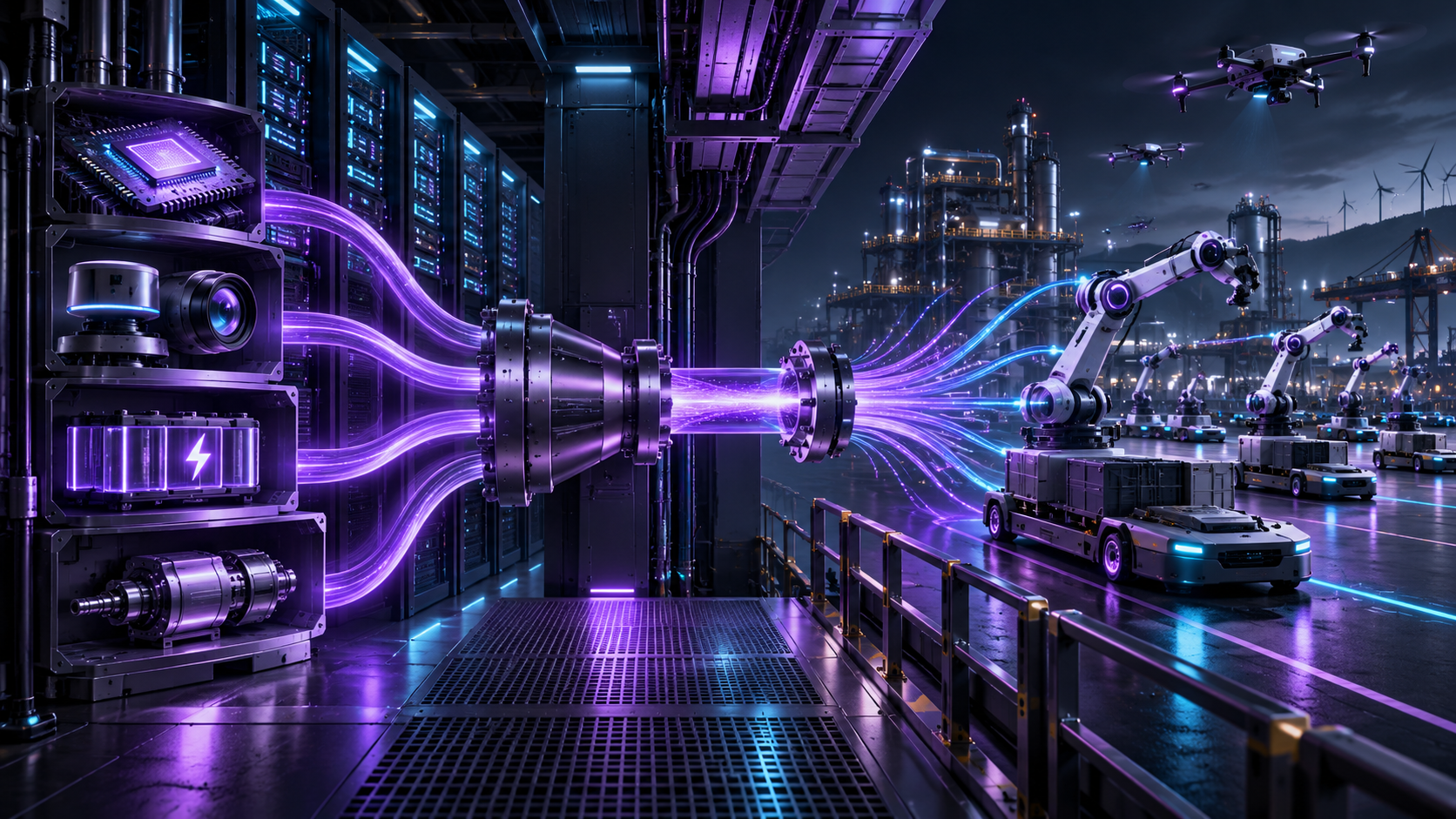
The Physical AI Chokepoint explores the industrial constraints governing the deployment of intelligent robots, autonomous systems, advanced manufacturing equipment, and other forms of embodied AI.
Unlike purely digital applications, physical intelligence depends on the coordinated performance of sensors, processors, memory, communications, power systems, actuators, and precision manufacturing.
The paper examines why advances in AI models alone cannot guarantee rapid physical deployment—and how hardware integration, reliability, energy efficiency, manufacturing scalability, and real-world qualification will shape the economics of the next automation cycle.
